A Collector’s Eye: The Quiet Force of a Global Voice
Thomas Crawley, NYC Art Review 12/1/25
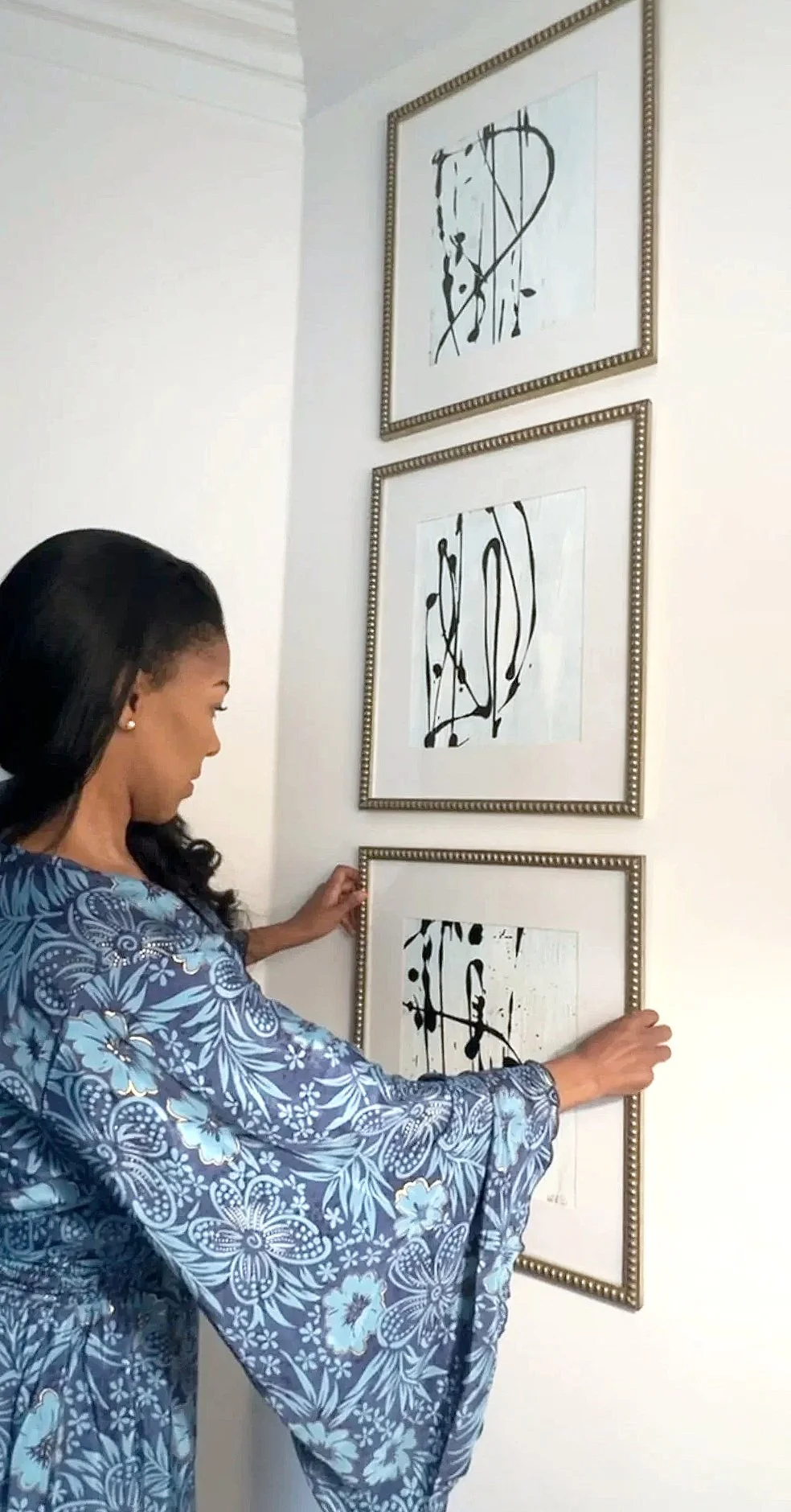
There are moments in collecting when you encounter an artist whose work resists easy categorization not because it is obscure, but because it is expansive. The paintings of Sarah-Elizabeth (“S-E”) belong to that rare category. They do not announce themselves with spectacle; they reveal themselves with presence. To stand before her work is to sense time layered upon itself memory, motion, restraint, and release held in careful tension.
S-E is emerging at a moment when the art world is once again craving authenticity over performance. Her practice reflects that shift. While many artists are still chasing visibility, her work has already found its way into rooms that matter: private collections across continents, commissioned works placed in spaces of influence, and presentations that move fluidly between North America, Europe, Africa, and the Caribbean. This is not accidental reach; it is resonance.
What defines her as uniquely compelling is her ability to merge lived global experience with emotional discipline. Her canvases feel traveled. Not geographically in a literal sense, but psychologically. One senses accumulated conversations, quiet observation, diplomacy, loss, joy, and resolve. The surfaces carry weight without heaviness. Color is deployed with intention, never indulgence. Gesture is present, but never careless.
As a collector, what I find most striking is her refusal to over explain. The work does not instruct the viewer; it invites them. In an era dominated by artist statements that do too much, S-E trusts the intelligence of her audience. This confidence is rare, especially in artists still being labeled as “emerging.”
Her growing international presence reinforces that confidence. She has showcased works across multiple continents, with commissioned pieces finding homes in private collections held by cultural leaders, executives, and, notably, heads of state around the globe. These commissions are not decorative gestures; they are symbolic acquisitions. Works chosen to mark legacy, transition, and identity.
Angela Hutchinson, Los Angeles executive and agent, describes Sarah-Elizabeth’s work with clarity:
“Sarah-Elizabeth creates from a place of lived authority. Her art doesn’t ask permission to exist in powerful spaces. Rather it belongs there. Collectors respond to that instinctively.”
That sense of belonging is key. Sarah-Elizabeth’s art does not aspire upward; it arrives fully formed. It understands power, but it is not seduced by it. It understands beauty, but does not rely on it. Instead, it offers something more enduring: emotional intelligence rendered visually.
There is also an undeniable gendered strength in her work, not overt, not confrontational, but assured. S-E joins a lineage of female artists whose power lies in restraint and clarity rather than disruption for its own sake. Her work asserts that complexity can be elegant, and that softness can coexist with authority.
Collectors are paying attention because they recognize longevity. Museums look for inevitability. S-E feels inevitable.
As her work begins to circulate globally, what will matter most is not how quickly her name rises, but how steadily it endures. From a collector’s perspective, that trajectory is already visible. Sarah-Elizabeth is not simply an artist to watch; she is an artist to acquire now, while the story is still being written.
And for those of us fortunate enough to encounter her work early, there is a quiet satisfaction in knowing when something rare has entered the conversation.